Bioenvironmental Sciences
Faculty of Bioenvironmental Sciences

- Introduction
- Key Features
- Field of Study
- Curriculum
- Facilities
From Foundational Study to Specialized Research
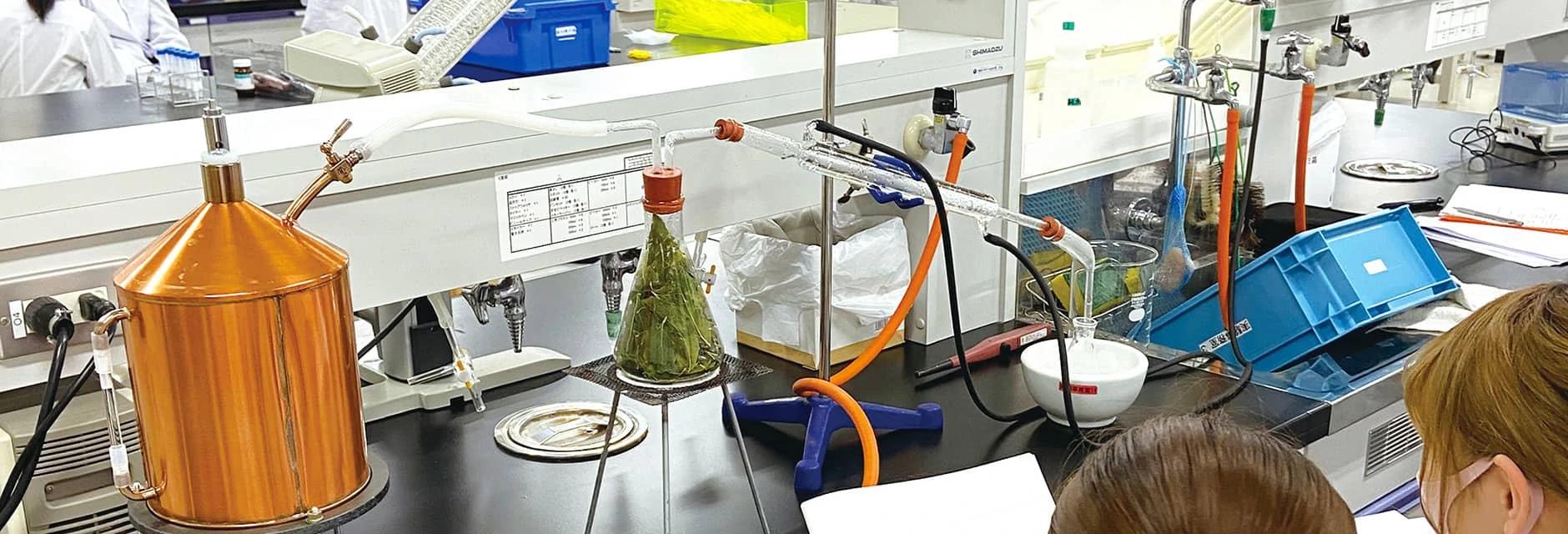
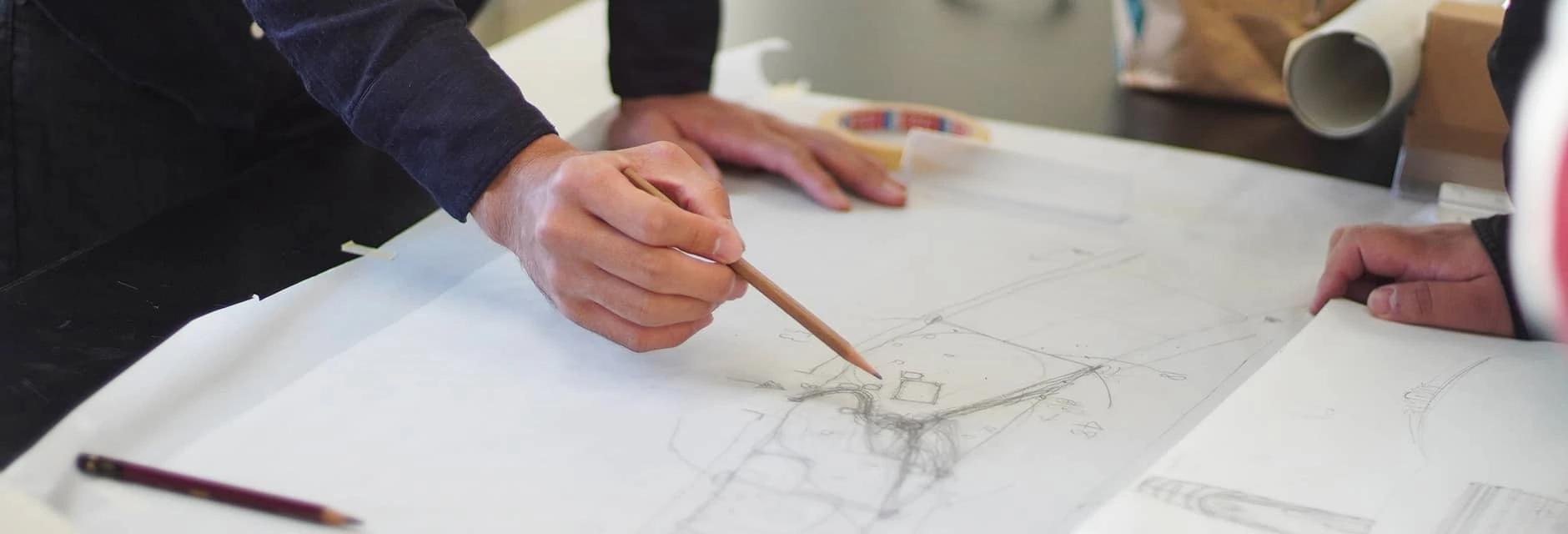
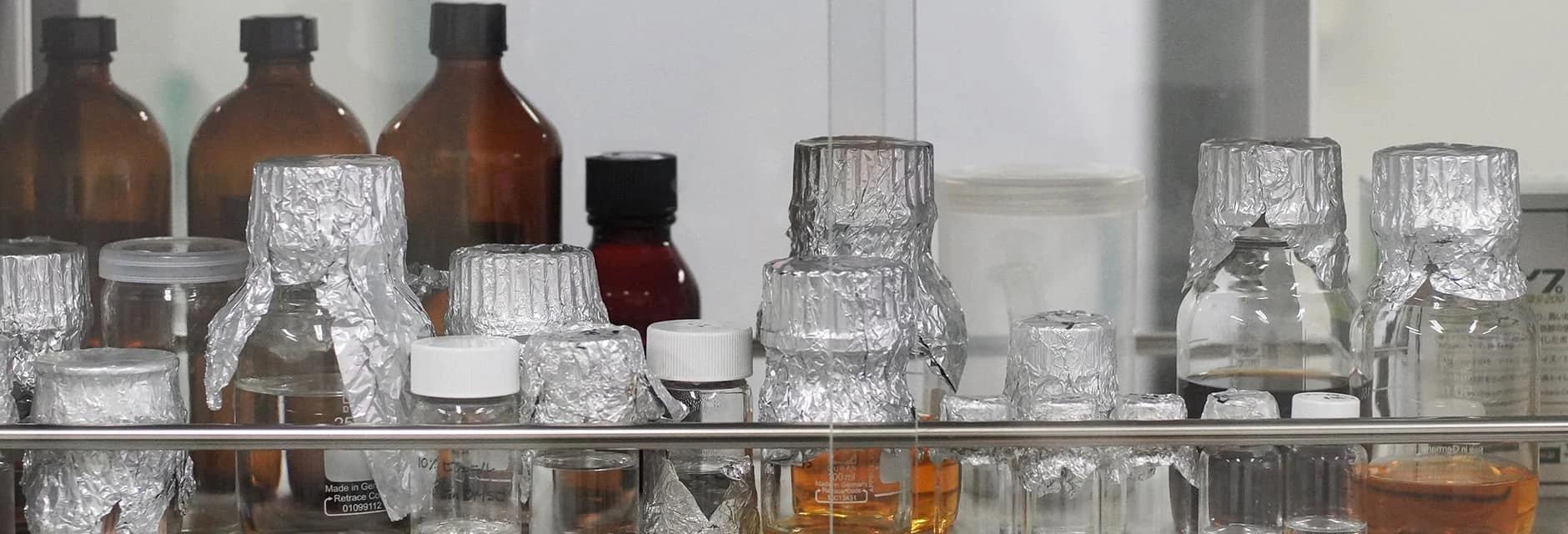
KUAS Bio Program offers an efficient, hands-on curriculum in which more than half of the coursework is dedicated to laboratory experiments and field-based training. Because the campus is equipped with large, fully outfitted laboratories, experimental facilities, agricultural fields, and even a forest used for ecological studies, students begin practical training from the very start of their first year. This early exposure allows them to immediately connect scientific theory with real-life biological and environmental phenomena.
During the first two years, students build a strong foundation in bioscience, environmental studies, and food and agricultural sciences while gaining extensive experience through experiments, fieldwork, and observation-based learning. Throughout these activities, experienced professors and skilled instructors provide detailed guidance on experimental methods, laboratory techniques, and field-based research practices. Their close support ensures that students develop strong technical skills and confidence as they progress through the program.
From the third year onward, students choose a specialized field that aligns with their personal interests and career goals, enabling them to pursue advanced, in-depth coursework and research topics.
Because they have already acquired professional skills and practical techniques early in their studies, they can engage more independently in research activities and explore complex scientific questions. In addition, students have opportunities to participate in collaborative research projects with external research institutes, government organizations, and industry partners. These experiences allow them to apply their knowledge to real-world challenges and develop valuable scientific and professional competencies that prepare them for future careers in biotechnology, environmental science, food and agricultural research, and many other related fields.
Curriculum Overview
KUAS’ curriculum is designed to help students confidently plan their future pathways by providing a career-ready balance of Liberal Arts Courses and Specialized Courses in each academic department. Through this combination, students develop both international and social literacy while building the knowledge and skills needed for their chosen fields.
Liberal Arts Courses
Liberal Arts Courses provide a diverse range of education that fosters essential skills for engaged participation in society. These include foundational subjects that strengthen literacy and language abilities, as well as courses related to sports, culture, and career development—allowing students to broaden their perspectives in multiple directions. As Liberal Arts Courses bring together students from various faculties and nationalities, they are offered not only in English but also in Japanese. Gaining basic Japanese proficiency and taking Japanese-taught courses can be highly valuable for deepening intercultural understanding and improving communication skills.
Specialized Courses
Each department offers a structured set of specialized courses that allow students to build professional skills systematically and across disciplines—from basic theories to applied and experience-based hands-on training. Students can freely choose specialized courses aligned with their interests and career goals, enabling them to develop both expertise and technical competence.
In the Faculty of Bioenvironmental Sciences, most Specialized Courses are conducted in English, although some are offered exclusively in Japanese. While international students are encouraged to take Japanese-taught courses to broaden their academic scope and learning opportunities, they can still fulfill all graduation requirements without enrolling in courses conducted in Japanese.
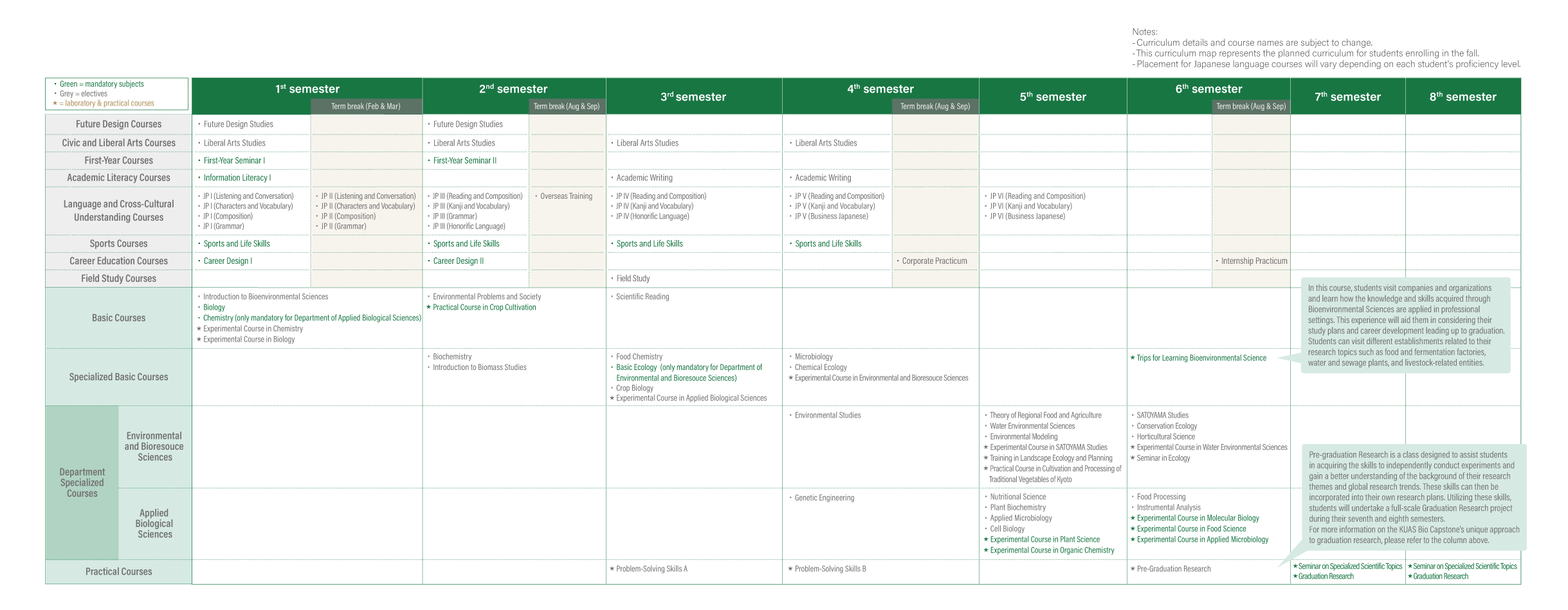
Curriculum Map (Click to enlarge)
Course Lists
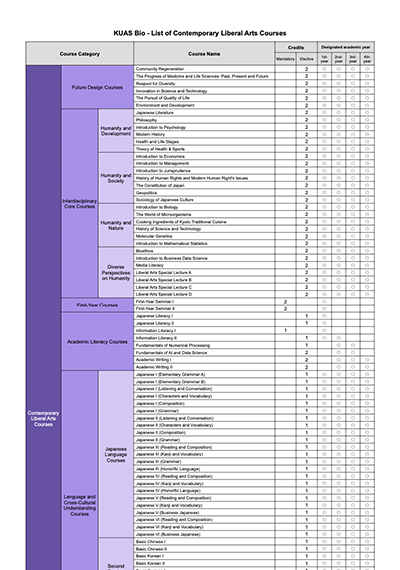

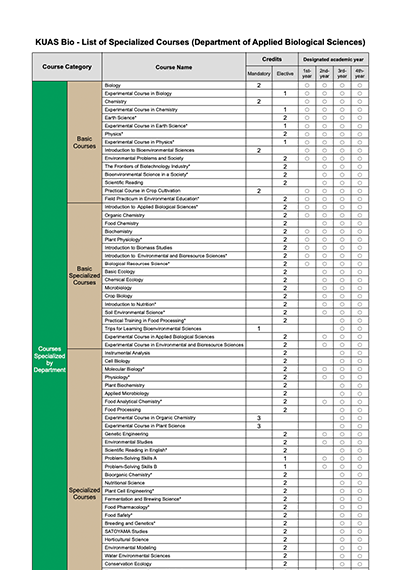
Curriculum Structure
The specialized courses in the Faculty of Bioenvironmental Science are divided into three categories: Basic Courses, Basic Specialized Courses, and Specialized Courses, with the depth of study progressing from the basic level upward. In addition, each department has its own distinctive structure, as outlined below.
Department of Environmental and Bioresource Sciences
Students begin their studies in the first year by acquiring foundational knowledge in the natural sciences and exploring potential academic and career pathways through Introduction to Environmental and Bioresource Sciences.
From the second year onward, they progressively develop specialized expertise in environmental and bioresource sciences through a combination of lectures, experiments, laboratory work, and fieldwork, taking full advantage of the campus’s vast natural environment and full-scale experimental facilities. In doing so, students gain practical skills essential for understanding the environment, biology, agriculture, and regional symbiosis. In the Problem-Solving Skills courses, students work independently on projects in collaboration with local communities, organizations, companies, and other universities, allowing them to apply their knowledge to real-world issues.
By the fourth year, students are assigned to their laboratories, where they select a research theme of personal interest and undertake Graduation Research and Seminar on Specialized Scientific Topics. Through these activities, they integrate the knowledge and skills cultivated during their first three years and conduct research aimed at creating environments in which people and nature can coexist in harmony.
Furthermore, through community collaboration in Graduation Research and other practical training courses, students develop the ability to approach social challenges with a professional mindset and contribute actively to the advancement of environmental and bioresource sciences.
Department of Applied Biological Sciences
Students begin their studies in the first year by acquiring foundational knowledge in the natural sciences and exploring future academic and career pathways through Introduction to Applied Biological Sciences.
From the second year onward, they progressively deepen their expertise in applied biological sciences through a combination of lectures, experiments, and laboratory exercises, taking full advantage of the campus’s expansive natural environment and full-scale experimental facilities. In doing so, students develop the laboratory techniques needed to study biological mechanisms and functions at the molecular, genetic, cellular, and individual levels. Students also broaden their understanding of food functionality, processing technologies, and fermentation and brewing sciences. Building on a solid foundation, they advance into specialized and cutting-edge fields in a well-balanced, step-by-step manner through both theoretical study and hands-on experimentation.
In the third year, students are assigned to their respective laboratories, where they begin their pre-graduation seminar and research activities.
By the fourth year, they embark on Graduation Research and the Seminar on Specialized Scientific Topics, integrating the knowledge and skills gained over their first three years and conducting research that prepares them to contribute to the ongoing development of applied biological sciences.
Additionally, through collaboration with the local community in Graduation Research and other practical training courses, students cultivate the professional ability to address real-world social issues.
Academic Degree and Graduation Requirements
- Academic Degree: Bachelor of Bioenvironmental Sciences
- Duration of Study: 4 years (8 semesters)
- Required Credits: 128 credits in total (50 credits from Liberal Arts Courses, 78 credits from Specialized Courses)