Engineering (Undergraduate)
Faculty of Engineering
- Introduction
- Key Features
- Field of Study
- Curriculum
- Facilities
Where Hands-On Learning Meets Advanced Engineering
A core educational objective of the KUAS Eng Program is to integrate engineering theory with hands-on practice and apply this knowledge to real-world challenges. Throughout their studies at KUAS, students build strong technical skills and learn how to use them effectively in their future engineering careers.
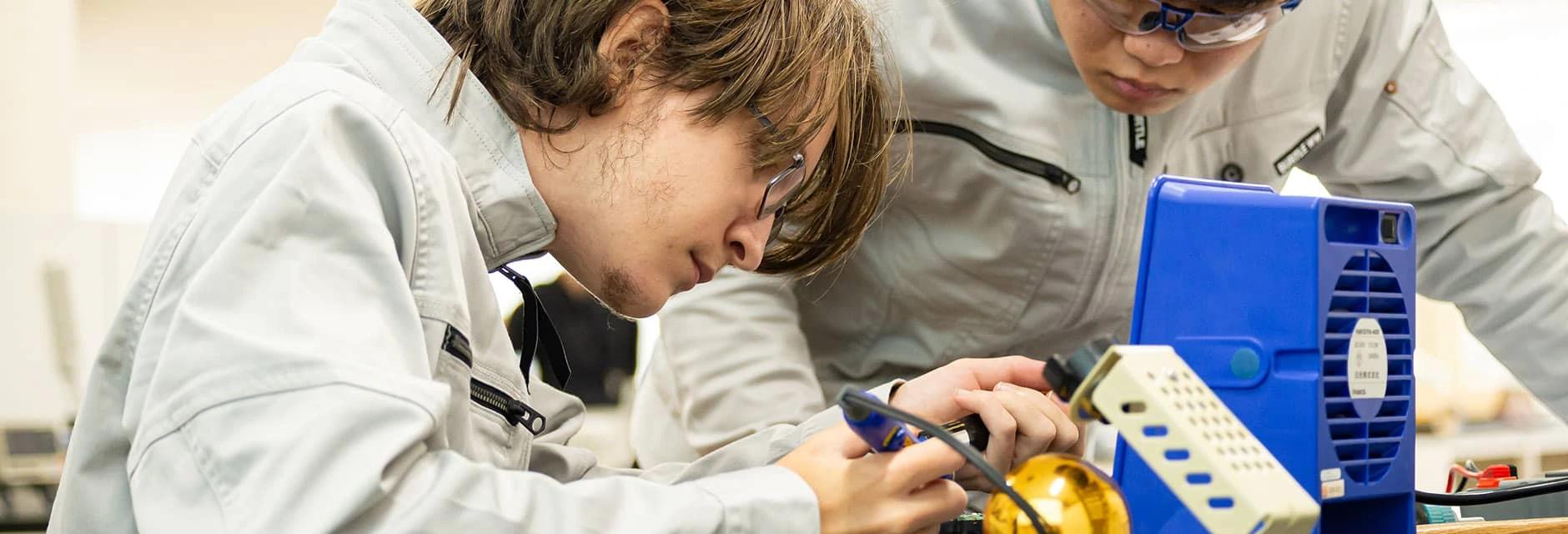
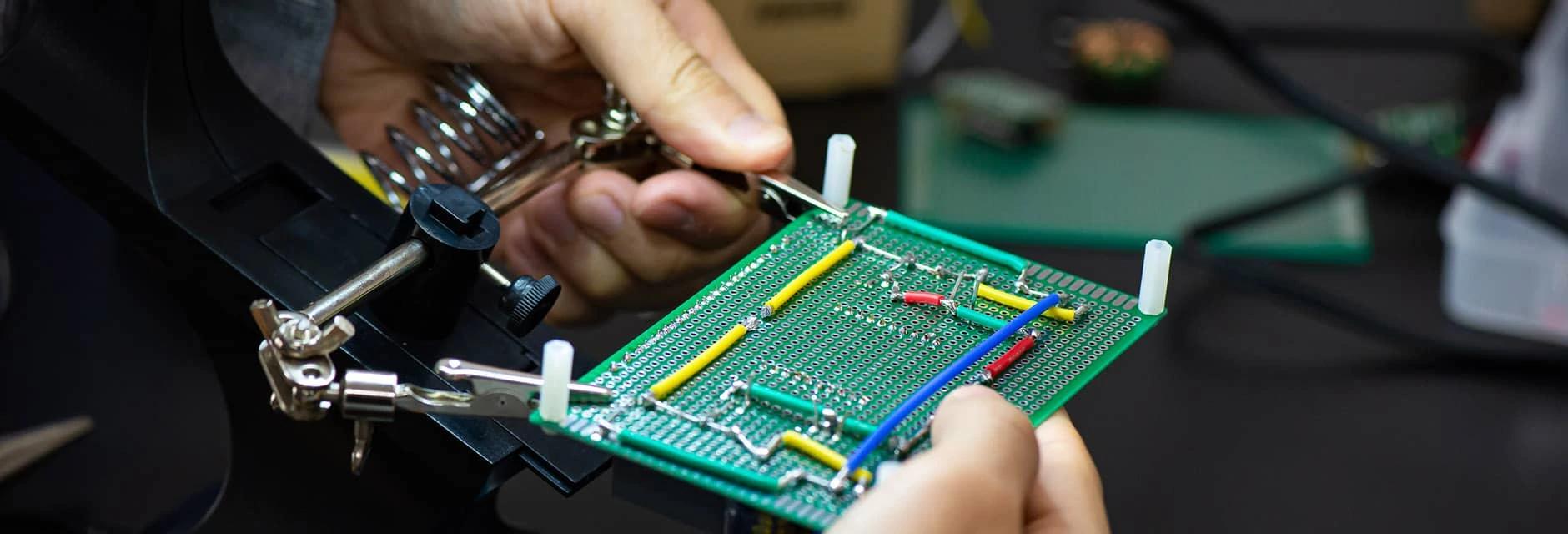
In their first year, students strengthen their foundation in essential physics and mathematics while gaining practical experience in robot control, programming, and electronic circuits through intensive hands-on training.
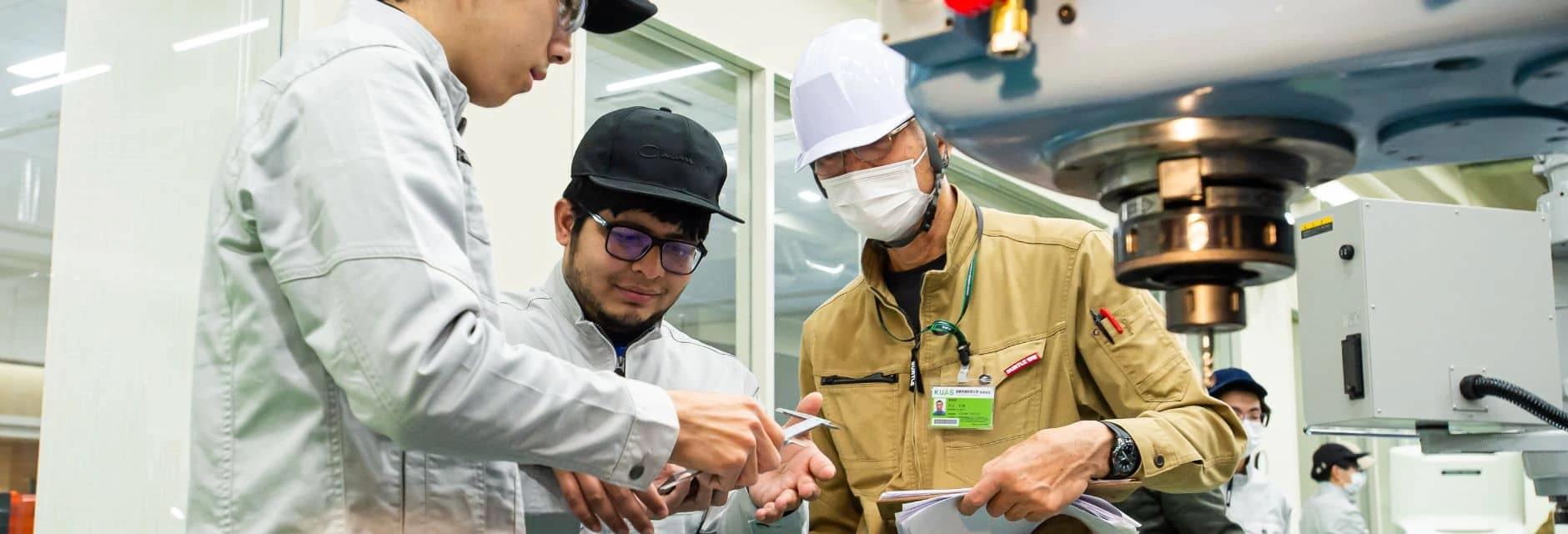
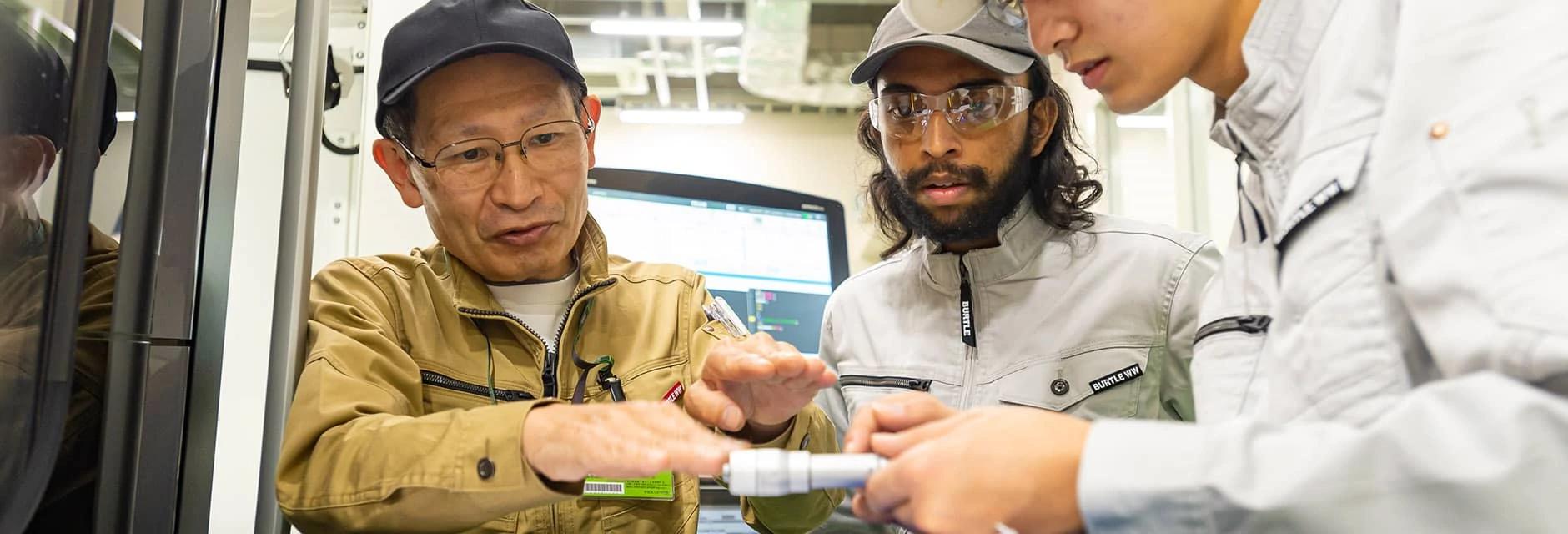
During the second year, they learn to operate a variety of state-of-the-art machine tools and begin engaging in full-scale manufacturing projects, further enhancing their practical engineering abilities. These experiences help students build upon their foundational skills and begin shaping them into more advanced, practical engineering competencies.
From the fourth semester onward, students can participate in the Keystone (Pre-Capstone) Project, where they work on real engineering problems and evaluate how well the theories and techniques they have learned apply in practical settings.
In addition, students can deepen their expertise through advanced elective courses—including dynamic mechanical systems, software systems engineering, and other specialized subjects. These courses encourage students to pursue areas that match their interests and curiosity, empowering them to develop strong, independent problem-solving skills that lead to practical, innovative, and creative engineering solutions.
Curriculum Overview
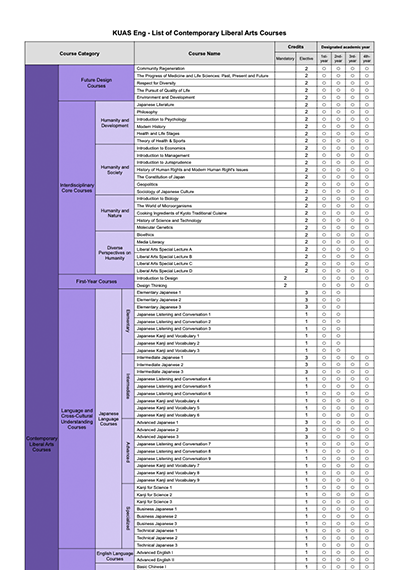
KUAS’ curriculum is designed to help students confidently plan their future pathways by providing a career-ready balance of Liberal Arts Courses and Specialized Courses in each academic department. Through this combination, students develop both international and social literacy while building the knowledge and skills needed for their chosen fields.
Liberal Arts Courses
Liberal Arts Courses provide a diverse range of education that fosters essential skills for engaged participation in society. These include foundational subjects that strengthen literacy and language abilities, as well as courses related to sports, culture, and career development—allowing students to broaden their perspectives in multiple directions. As Liberal Arts Courses bring together students from various faculties and nationalities, they are offered not only in English but also in Japanese. Gaining basic Japanese proficiency and taking Japanese-taught courses can be highly valuable for deepening intercultural understanding and improving communication skills.
Additionally, students in the Faculty of Engineering have access to a dedicated course designed to strengthen logical thinking skills, a crucial foundation for engineers.
Specialized Courses
Each department offers a structured set of specialized courses that allow students to build professional skills systematically and across disciplines—from basic theories to applied and experience-based hands-on training. Students can freely choose specialized courses aligned with their interests and career goals, enabling them to develop both expertise and technical competence.
While all of the Specialized Courses offered by the Faculty of Engineering are taught entirely in English, international students still have opportunities to collaborate with Japanese students and industry professionals through team projects and industry-related activities.
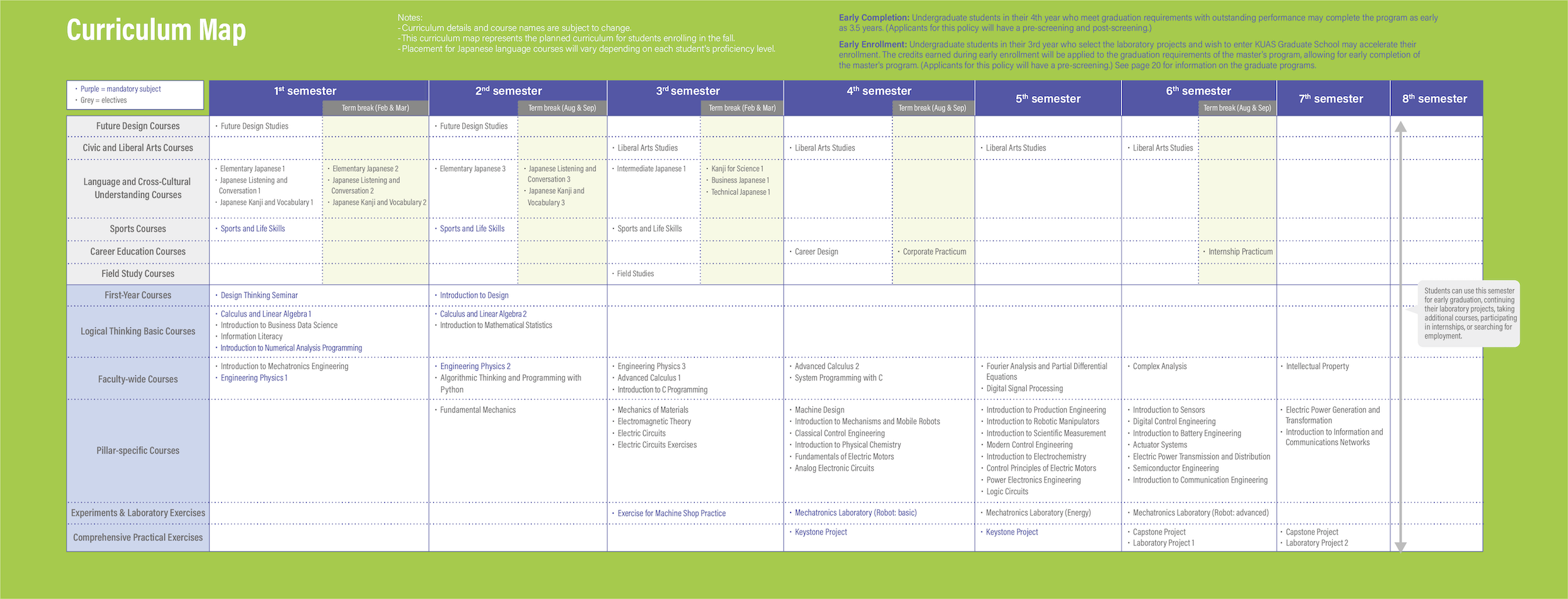
Curriculum Map (click to enlarge)
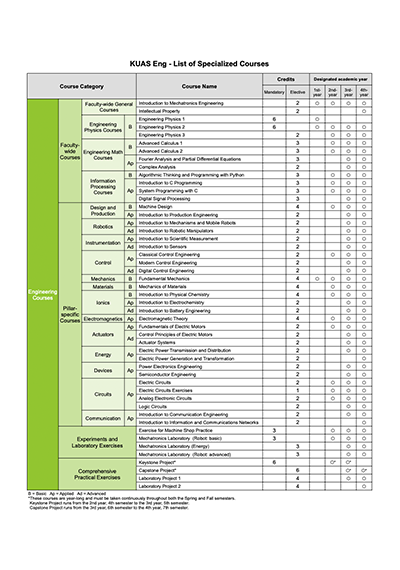
Course Lists
Curriculum Structure
The Faculty of Engineering’s specialized courses are organized into four categories—Faculty-wide Courses, Pillar-specific Courses, Experiment and Laboratory Exercises, and Comprehensive Practical Exercises. Faculty-wide and Pillar-specific Courses are further divided into Basic, Applied, and Advanced levels.
Faculty-wide Courses
Students build a foundation in physics, mathematics, information processing, and engineering ethics. In the first year, they take introductory courses such as Introduction to Mechatronics Engineering, Engineering Physics, Calculus and Linear Algebra, and programming courses using MATLAB and Python. These subjects provide the essential academic base needed for advanced study in each pillar.
Pillar-specific Courses
From the second semester, students study specialized subjects across 13 engineering pillars: Design & Production, Robotics, Instrumentation, Control, Mechanics, Materials, Ionics, Electromagnetics, Actuators, Energy, Devices, Circuits, and Communication. Basic-level courses are recommended for all students, while Applied and Advanced Courses are electives, allowing students to tailor their learning to their interests and career goals.
Experiment and Laboratory Exercises
Through hands-on courses utilizing state-of-the-art facilities and equipment, students develop essential skills in manufacturing, machining, and robotics. After acquiring foundational techniques in the Exercise for Machine Shop Practice offered in the 3rd semester, students advance to a series of laboratory courses from the 4th to 6th semesters. These labs further strengthen their practical understanding through problem-based learning (PBL) and applied exercises.
Comprehensive Practical Exercises
Students participate in the mandatory Keystone Project during their 4th and 5th semesters, followed by the Capstone Project in the 6th and 7th semesters. These team-based projects require students to tackle real-world engineering challenges and foster practical problem-solving abilities as well as teamwork and communication skills. Students who intend to enter the graduate program are required to take the Laboratory Project instead of the Capstone Project.
Academic Degree and Graduation Requirements
- Academic Degree: Bachelor of Engineering
- Duration of Study: 4 years (8 semesters)*
- Required Credits: 128 credits in total (50 credits from Liberal Arts Courses, 78 credits from Specialized Courses)
*Students in the Faculty of Engineering are also eligible for an early completion program. Please see below for details.
Early Completion
Undergraduate students in their 4th year who meet graduation requirements with outstanding performance may complete the program as early as 3.5 years. (Applicants for this policy will have a pre-screening and post-screening.)
Early Enrollment
Undergraduate students in their 3rd year who select the laboratory projects and wish to enter KUAS Graduate School may accelerate their enrollment. The credits earned during early enrollment will be applied to the graduation requirements of the master’s program, allowing for early completion of the master’s program. (Applicants for this policy will have a pre-screening.)